
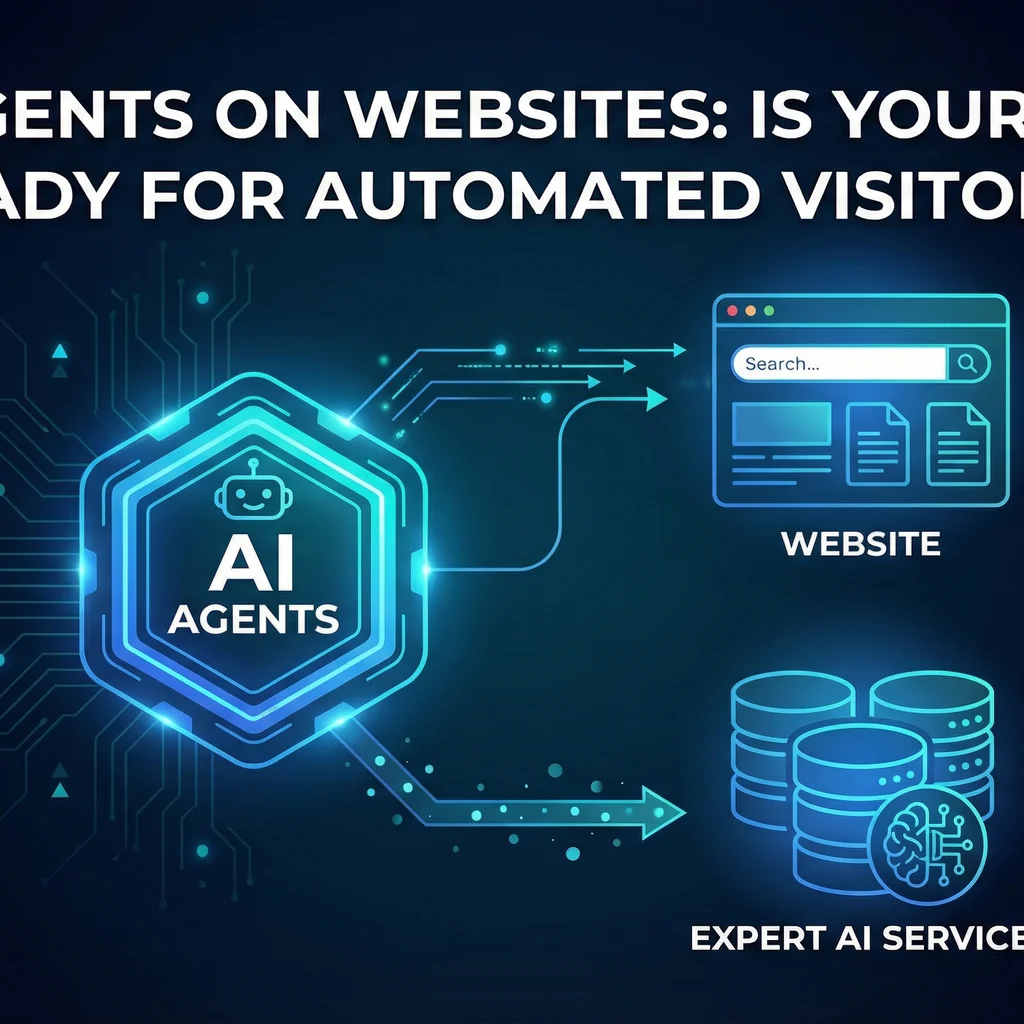
If you think your website is only for human eyes, it’s time to reset your expectations: AI agents on websites like Claude and Pomelli are already crawling, reading, and interpreting your content alongside actual visitors. The question isn’t if AI-powered web crawlers are coming, but whether your site is ready for this new era of intelligent automated traffic.
The age of purely human audiences is over. Increasingly, advanced AI agents scan websites for everything from lead generation and brand DNA scanning to dynamic content extraction and workflow triggers. If your site isn’t structured and up-to-date, you’re missing opportunities—and risking misinterpretation by sophisticated bots.
Key takeaway: Structured, current, and machine-readable content is essential for both human and AI visitors.
Unlike legacy web crawlers, modern AI agents don’t just index pages. They interpret meaning, filter relevance, and even trigger automated tasks based on what they find. With industry leaders like Claude rolling out dynamic web search filtering, sites that aren’t optimized may get skipped over or misunderstood by these intelligent visitors.
What does an AI-powered web visitor look like in practice? Tools such as Pomelli, Claude, and even open-source bots now go far beyond simple page scraping. They:
Claude’s latest release pulls only the most relevant site content into context, saving API tokens and improving response accuracy for AI-driven apps (detailed here). That means sites with clutter or stale data may get ignored—or worse, misrepresented.
"Dynamic web search filtering—Claude reads websites and pulls only relevant content into context, saving API tokens."
As more workflows run on AI agent data, even mainstream sites must anticipate this level of scrutiny.
In the past, handling increased bot traffic meant blocking scrapers or monitoring for suspicious patterns. Now, with AI agents actively seeking actionable content, the goal is alignment: making sure your public-facing information is structured for both humans and intelligent bots.
AI-generated content also brings new IP and copyright risks. With technologies like Seedance 2.0 creating synthetic media (see here), provenance and legal exposure are business-critical. Automated agents can't (yet) guarantee the legal cleanliness of what they find on your site.
The move from manual checks to automated, ongoing readiness is accelerating. AI-based site performance tools now let operators catch issues before either Google or AI agents do.
Wondering if AI agents are already visiting you? Here’s how progressive teams are detecting and analyzing automated traffic:
curl -A "ClaudeBot/1.0" https://yoursite.com
# Check for bot in your logs by filtering user agent strings
Many teams also cross-reference their experience with data from platforms like StrongDM Software Factory, which tracks automated and AI-driven site interactions at scale.
Given the rise of AI-powered web bots, preparation pays. Here’s how to optimize for both real and artificial visitors:
AI bots—like humans—bounce from slow or broken pages. Monitor site speed and uptime, patch vulnerabilities, and audit for dead links regularly.
Sites optimized for AI agents see improved automation outcomes, fewer support escalations, and better search representation—without sacrificing human usability.
For a bigger blueprint, platforms like Expert AI Services architect solutions that route traffic and automation tasks to the best-fit AI models—no lock-in, just efficient integration and compliance control.
Preparing for AI agents isn’t a one-time project—it’s an ongoing workflow. Here’s an automation blueprint to keep your website ahead of the curve:
Specialized AI agents can now cost up to $20,000/month, replacing expensive knowledge worker tasks. For Kansas and Midwest businesses, this makes it more important than ever to make your website AI-friendly, future-proofing your lead generation and customer engagement pipelines (see the economics breakdown).
Businesses that automate AI readiness gain a competitive edge—moving faster, with fewer errors, and reaching both human and digital buyers. That’s tomorrow’s advantage, starting now.
If you’re ready to prepare your website for not just more visitors, but smarter ones, consider leveraging a model-agnostic approach that routes traffic and automations to the right AI at the right cost. Solutions like FlashDeploy automate AI agent readiness across your entire stack and ensure ongoing compliance—no vendor lock-in required. Our roots in operational tech mean you get real-world solutions, not just theory.
Don’t let your site fall behind the new generation of automated visitors. Take the first step toward making your web presence AI-ready.
Process Type
Website Automation Readiness
Time Saved
Ongoing; prevents bottlenecks and manual fixes
Tools Used
FPE Deploy, server logs, StrongDM Software Factory, CMS automation
Before
Manual monitoring for bot traffic with limited control over how AI agents interacted with site content; risks of outdated data, poor performance, copyright exposure.
After
Automated readiness with proactive detection of AI agents, machine-readable content, API endpoints, and copyright compliance—enabling smoother AI interaction and reduced overhead.