
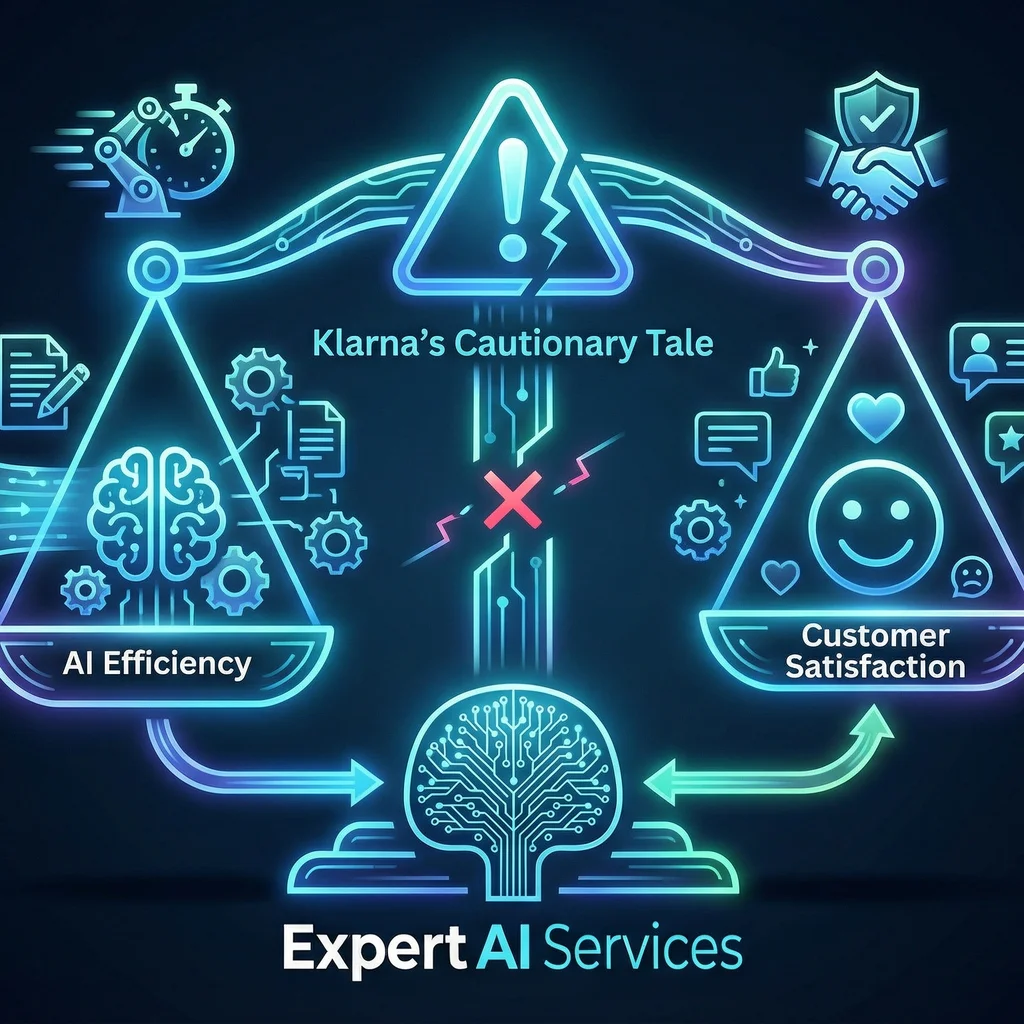
Balancing AI efficiency and customer satisfaction has become a pressing challenge for firms embracing automation. The promise is tempting: AI-driven platforms can scale customer support instantly, cut costs, and serve customers around the clock. Fintech innovator Klarna saw AI efficiency as a strategic differentiator. By automating more than 700 roles with AI, Klarna touted revenue per employee increases and faster response times, according to TechCrunch’s coverage of their revenue surge.
The allure is undeniable:
Klarna’s initial vision: automation delivers both efficiency and delightful customer experience—at scale.
But the bright promise of automation can sometimes cast a shadow. As AI-driven workflows replace people, subtle signals of customer dissatisfaction can go unnoticed—until complaints spike or churn numbers rise. Klarna’s drive for efficiency overlooked crucial nuances that only experienced humans were catching.
Efficiency gains are counterproductive if they erode customer trust and loyalty over time.
Klarna’s headline-making decision to replace roughly 700 employees with AI was celebrated as a tech success—until customer satisfaction plummeted. The CEO publicly admitted they went "too far" in prioritizing efficiency and cost over service quality (read the case breakdown).
After replacing 700 workers with AI, Klarna began rehiring humans after customer satisfaction dropped.
When businesses push too hard for AI-driven efficiency, they risk underestimating the value of human nuance. In Klarna’s case, customers faced:
AI-powered customer service must know when to route a case to a human or to escalate nuance beyond the model’s scope. Otherwise, efficiency gains are offset by loss of trust—something Klarna experienced firsthand.
Automation is most effective when it augments—not replaces—human judgment.
For smaller businesses looking to implement AI customer service solutions, the lesson is clear: model-agnostic architectures offer flexibility, but only a blend of automation and local human expertise truly protects your brand reputation.
It's also important to recognize that every business context requires unique guardrails. Blindly copying big-tech automation blueprints, without custom-tuned escalation logic or localized oversight, can expose organizations to the same service pitfalls Klarna encountered.
Klarna ultimately walked back some of its aggressive automation, rehiring human support staff to restore service quality. Their experience highlights what business leaders and customer service managers should consider when deploying AI:
Modern AI strategy isn’t just about speed—it’s about keeping service truly customer-centric.
Real resilience comes from weaving automation into your existing customer journey, never shoehorning support into rigid, model-driven flows. Consider small pilots and cross-disciplinary review sessions to surface new edge cases and evolving customer expectations before scaling up across your business.
The Klarna AI case study is a vivid reminder: automation and efficiency are only valuable if they reinforce—not undermine—customer trust and loyalty. For business owners, operations leads, and support professionals, several key lessons stand out:
Key Takeaway: The most successful automation strategies are designed from the customer back—not the cost ledger forward.
Looking forward, businesses can borrow from Klarna’s hard-won lessons by emphasizing continual improvement and a true partnership approach between automation and human expertise. Future-ready organizations use AI for what it does best, but never lose sight of the personalized, context-sensitive service that customers remember and value.
Want expert guidance building a model-agnostic, customer-first AI strategy? Our team brings decades of field experience to every deployment, prioritizing both operational efficiency and the human touch in every solution.
Client Type
Fintech giant (Klarna, public domain case)
The Problem
Customer satisfaction dropped dramatically after replacing most customer support roles with AI.
The Solution
Rehired human agents, established escalation pathways, balanced automation with human expertise.
Result
Restored customer confidence and improved satisfaction scores.
Result
Demonstrated that pure automation can undermine customer loyalty.
Result
Shifted future AI deployments to blended automation + human service models.
Conclusion
Key Takeaway: The most successful automation strategies are designed from the customer back—not the cost ledger forward.