
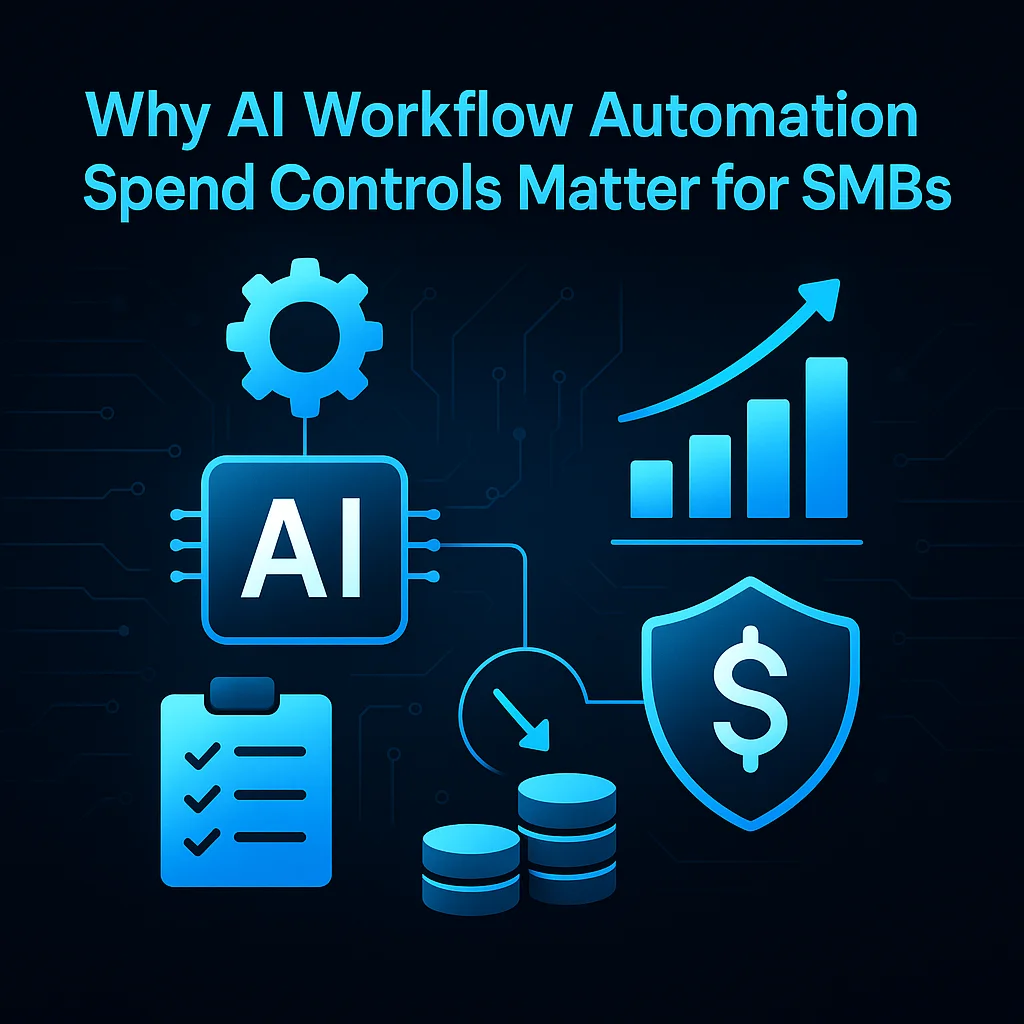
AI workflow automation spend controls have leapt to the front of the conversation as small and midsize businesses (SMBs) shift from AI experimentation to real operational deployment. Even a year ago, most SMBs were dabbling in chat tools; now, they're wiring up multi-agent workflows for everything from customer support to reporting.
This surge is driven in part by industry leaders offering tailored solutions for smaller companies. Anthropic's Claude for small business overview shows that AI providers are actively courting this segment, promising flexibility and growth potential. But with popularity comes pressure: each new agent, model, and workflow can add invisible costs to your bottom line.
The strongest immediate pain signal is not 'which model is smartest,' but how to prevent agent automation from creating uncontrolled API spend, duplicated work, and invisible usage across tools.
Unlike large enterprises with deep pockets, SMBs operate on tight margins and need every technology investment to be accountable. Without proper AI workflow automation spend controls, businesses risk watching their automation costs balloon in ways eerily similar to unchecked payroll or advertising spend.
AI agents and workflows can rack up expenses in the background, especially as teams experiment with chaining tools. Each call to an external API, every automated process fired off without budgetary oversight, can turn a promising workflow into a silent financial drain.
Key point: The real risk isn’t just overspending—but losing sight of where automation dollars go in the first place.
It’s easy to end up with overlapping automations—one agent handling emails, another duplicating tasks for reporting—amplifying costs without matching value. This is compounded by the growing number of vendors marketing specialized agents, each billing for their slice of productivity.
Industry news highlights rapidly changing AI workflow automation spend controls as a necessity, not just a nice-to-have. What’s fueling this?
AI spends grow not just from more tools—but from the compounding effect of small, unmonitored automations multiplying silently.
The most effective SMBs don’t wait for a blowout to rein in automation costs. Instead, they build spend controls and operational checks into their AI workflow automation from day one. Here’s what sets them apart:
Pro tip: SMBs with spend controls in place deliver measurable automation ROI—without unpredictable budget shocks or vendor handcuffs.
Moving from caution to control starts with a few practical steps. Here’s a field-tested blueprint:
SMB leaders don’t need a perfect tool—just a clear process to add visibility and control to every new piece of automation.
With AI workflow automation news regularly spotlighting fast-growing capabilities, tomorrow’s platforms will likely include robust budgeting and usage controls by default. But for now, businesses need to be proactive, not passive, in shaping their automation governance.
Major AI vendors are starting to signal stronger support for cost-control features—though details remain thin. Open-source and local integrators are well-positioned to serve SMB needs by building practical spend governance as part of every deployment, rather than an afterthought.
For Kansas and Midwest firms, working with partners who understand regional industries and the realities of tight margins can make all the difference. Trusted integration partners acting as AI general contractors help small businesses find the right balance of innovation and predictability in their automation initiatives. Learn more about the Expert AI Services philosophy and local focus on our About page.
Key takeaway: Spend control isn’t a barrier to AI automation. It’s a safety net that makes sustainable, measurable value possible—especially for resource-conscious SMBs.
Ready to take control of your AI workflow costs? Explore how custom cost controls, model-agnostic integrations, and transparent reporting can keep your automation budget predictable and productive.
Source
Anthropic, TechCrunch, Ed Zitron, Stanford Law
Kansas Impact
Kansas SMBs are especially vulnerable to uncontrolled AI costs due to tight budgets and hands-on operations. Local integrations and spend controls ensure investments bring sustainable value without unpredictable expenses.
Key Takeaway
Spend controls are critical for SMBs to realize sustainable automation ROI and avoid runaway AI costs.