
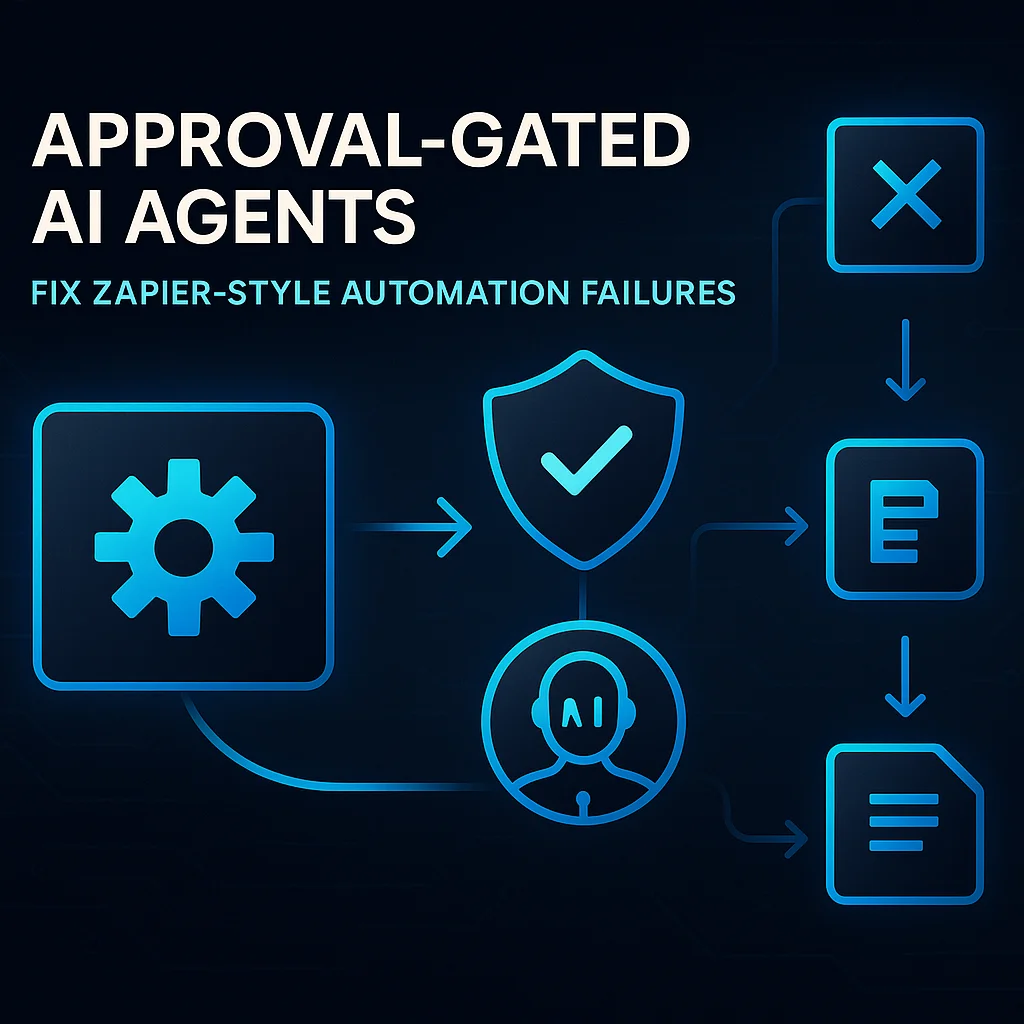
Approval-gated AI agents are emerging as the answer to brittle, failure-prone automations. For small business owners and operators, they offer a way to keep workflows reliable, adaptive, and secure even as things change behind the scenes. Here’s how pragmatic, approval-driven AI automation can rescue your most critical business processes.
For many small business owners, automation tools like Zapier promise relief from repetitive tasks. But too often, these automations fall apart—sometimes overnight. When your CRM adds a new field or your email templates change, even a minor tweak can leave a workflow nonfunctional. Suddenly, leads stop flowing, routine follow-ups are missed, or data pipelines freeze with mysterious errors.
Brittle automations fail quietly, and the real cost is missed opportunities you may never notice until it’s too late.
Why is this such a recurring issue? Static task tools like Zapier depend on workflows staying exactly the same between runs. If just one field, endpoint, or app configuration changes, the automation stumbles—and often leaves no useful trace.
In forums and operator meetings across the Midwest, the phrase "workflow brittleness" is shorthand for the headaches of maintaining these chains. As business needs shift, so must your automations. But traditional tools aren’t built for this adaptability.
When automations break, the impact is both operational and emotional. Staff lose trust. Owners fear what isn’t getting done, but may not have time—or diagnostics—to chase every failure. If automations are meant to relieve toil, brittle ones only add more work in the form of error chasing and guesswork.
For many Kansas operators, the solution starts with visibility. Diagnostic tools (like those explored in the Linkchart.art for workflow visualization) help map dependencies, but they can’t prevent core automation failures. What's needed is a fundamentally more adaptable approach.
Approval-gated AI automation offers a more resilient alternative to static, rule-based tools. Instead of blindly executing each step, AI agents that are 'approval-gated' pause at key moments—drafting actions, analyzing changes, and letting you (the operator) approve before anything important happens. This is particularly valuable if you deal with workflows that evolve, have high stakes, or require extra scrutiny.
AI agents become true helpers when human approval is built in—avoiding mistakes, building trust, and ensuring adaptability as workflows change.
This pattern is flexible enough to cover everything from CRM cleanup suggestions and report generation to follow-up message drafts and anomaly detection in advertising data. For a deep dive into reusable agent skills, see the obra/superpowers reusable agent skills project.
With approval gates, your workflow no longer crumbles with every change—it bends, not breaks.
AI-gated solutions are especially important for small business teams who can’t babysit every automation but also can’t risk costly mistakes. Learn more about Midwest-rooted practical automation philosophies on our about page.
Getting started with approval-gated AI agents doesn’t require an enterprise IT team or a massive budget. In fact, starting small is best. Here’s a basic example of what a configuration prompt for a lead follow-up workflow might look like:
You are an approval-gated AI assistant for {company_name}.
Draft a follow-up message for new leads using the latest CRM data.
Before sending, pause and present your draft for manager approval.
Log all actions for traceability. Only send approved drafts.
If the workflow changes (new fields, different email structure), update the draft and flag for review.Approval-gated automation doesn’t mean slow—it means protected. Operators can focus on what matters, knowing nothing will be finalized without their say-so.
For privacy-focused businesses or those needing even more control, local agent stacks like tinyhumansai/openhuman local AI project or supertone-inc/supertonic for private AI automation are gaining traction among SMBs who want to keep sensitive logic on site.
Not every process needs a human in the loop. But the more your workflow changes, the greater the risk if things go wrong—and the more valuable approval-driven automation becomes.
Think about the last time an automation failed and what it cost—whether in lost sales, reputational damage, or just wasted time untangling the mess.
Approval gates mean one bad data source, missed field, or misconfigured endpoint never derails your business operation.
For a practical Kansas perspective on deploying AI the right way, explore our step-by-step AI project setup workflow.
By focusing on one well-controlled approval-gated workflow, you set a standard for reliable and adaptable automation across your business.
Approval-gated AI agents put you back in control, combining the speed and efficiency of automation with the oversight your business needs. Want to see how approval gates could save your team hours—and headaches? Explore how custom AI services can transform your operations.
Process Type
Approval-driven workflow automation
Time Saved
Variable; prevents costly errors and reduces manual oversight
Tools Used
AI agent platforms, tinyhumansai/openhuman, supertone-inc/supertonic, Linkchart.art
Before
Brittle, error-prone Zapier flows that fail when workflows change
After
Adaptive AI agents that pause for approval, adjust to evolving processes, and maintain traceable logs