
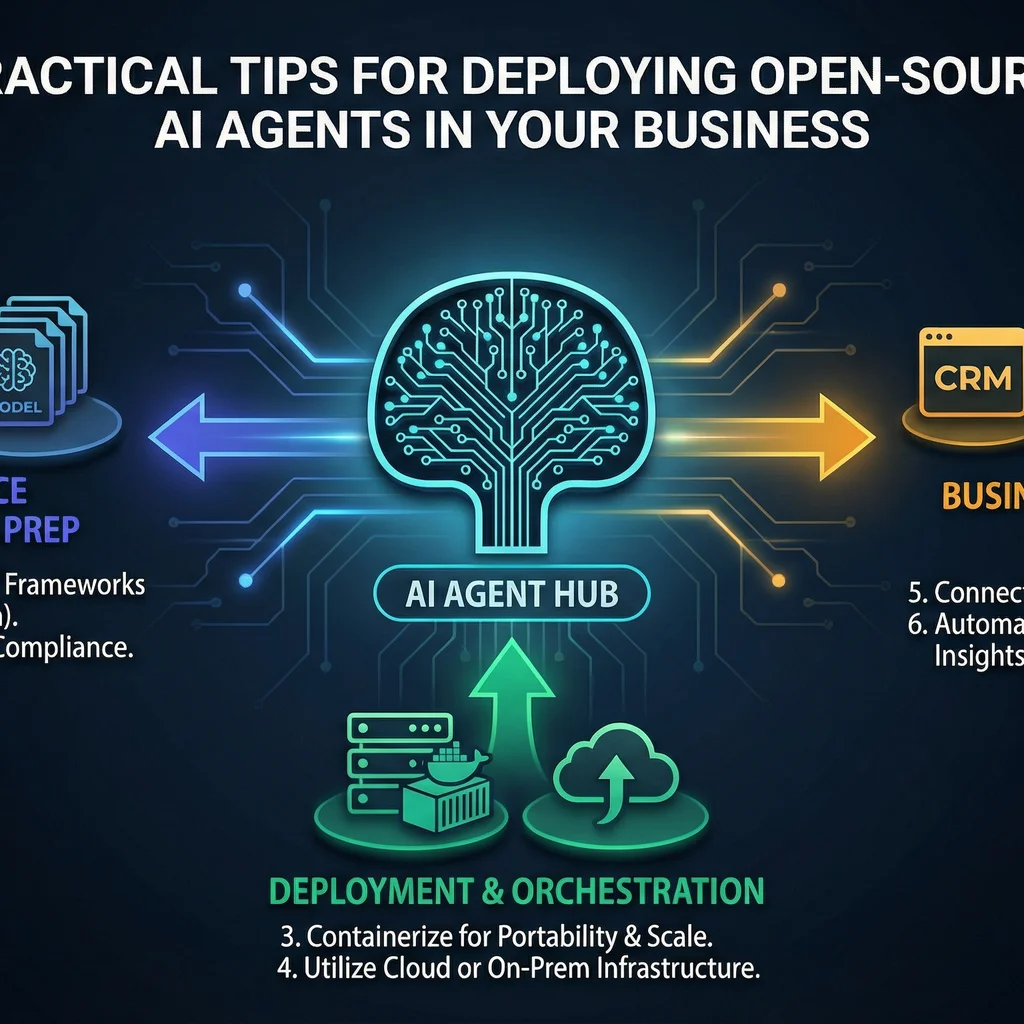
Deploying open-source AI agents is transforming how businesses automate tasks, streamline operations, and respond to changes—often without the hefty licensing fees or vendor limitations of proprietary solutions. Open-source AI in business is no longer just for hobbyists: solutions like OpenClaw are sophisticated enough to autonomously manage workflows as varied as calendar scheduling, code deployment, and even customer engagement—all self-hosted, model-agnostic, and running 24/7.
It's not just another lame chatbot, but a tool that takes action in the real world 24 hours a day, 7 days per week without smoke breaks.
What sets these agents apart is their ability to route tasks to the right AI model—Claude, GPT-5, DeepSeek, or open-source LLMs—based on cost, speed, privacy, or business needs. This model-agnostic approach prevents vendor lock-in, giving you true flexibility as your requirements evolve. And with viral adoption—over 145,000 GitHub stars for OpenClaw (source)—these platforms are demonstrating reliability at scale.
If you're considering business automation with AI, open-source agents are no longer fringe—they're a rapidly maturing backbone for agile business operations. The barrier to entry is dropping fast, whether you lead a technical team or manage a local business in need of sharper, cost-effective automation.
Before installing your first open-source AI agent, thoughtful preparation is essential to avoid unnecessary headaches and ensure a secure, smooth rollout. Consider these key areas in your AI implementation guide:
Clear requirements reduce scope creep, accelerate testing, and ensure your AI agent fits real workflows. Consider using a structured AI project framework like the one described in our project setup overview for systematic onboarding.
Model-agnostic architectures let you swap providers without rewriting your integration layer. This enables resilient, future-ready deployments.
Let’s walk through a practical installation of OpenClaw or a similar open-source AI agent for a small business workflow:
git clone https://github.com/openclaw/openclaw.git
cd openclaw
pip install -r requirements.txt
config.yaml to specify model routing preferences.Prioritize high-value, low-risk automations first—such as calendar reminders or report generation. Once you trust baseline agent behaviors, expand into more critical or sensitive business processes.
No matter how seasoned your team, deploying open-source AI agents brings common hurdles. Here’s how to address the sticky spots in AI agent deployment best practices:
Avoiding vendor lock-in is easier with model-agnostic open-source deployments. Swapping backend models becomes as simple as changing a config file.
Learn from others’ approaches: OpenClaw’s viral growth led to massive community documentation—read the project blog for rich lessons from real-world deployments.
AI agent security is paramount—these tools often perform actions on sensitive business data and infrastructure. Here’s how to raise your guardrails:
If you’re subject to industry-specific compliance requirements (GDPR, HIPAA), be sure your agent logs and audit trails are exportable and tamper-resistant. Most open-source projects document their approaches; review these in advance to avoid surprises.
Giving an AI agent access to your email, calendar, and code deployments requires trust and careful configuration.
Once your agent is in production, quantifying its benefit is crucial to justify ongoing investment and guide future improvements. Consider these methods to measure your AI ROI:
Keep these metrics visible on dashboards or via team reports—they’ll support your case for further automation or scaling up usage.
Open-source AI tools let you optimize for token spend and hardware ROI, not just vendor promises—this control is essential for small business resilience.
With a successful pilot under your belt, look to maximize automation value by integrating with more internal systems (think CRM, job routing, reporting). The open-source skills marketplace for agents like OpenClaw means new business processes can often be automated by enabling prebuilt skills or developing custom hooks.
If you want a hands-on example of AI agent deployment in a public good initiative, see our Civic Accountability project—demonstrating secure, compliant teamwork between open-source bots and human workflows.
Deploying open-source AI agents puts advanced automation within reach—but the biggest benefits go to teams that combine clear business goals, rigorous security, and a willingness to iterate. As the StrongDM Software Factory research and OpenClaw’s viral momentum show, small teams can see exponential impact by getting the basics right from day one.
For local businesses seeking help with configuration, integration, or model-agnostic architecture, we help teams bridge the gap from pilot project to production-scale automation. Learn more about our approach to practical, secure AI deployment on our About page.
Key takeaway: With the right preparation and phased deployment, open-source AI agents offer a powerful, low-cost path to automating and optimizing your business.
Connect with an expert to discuss custom deployment, integration, and scaling strategies tailored to your business needs.
Difficulty Level
Intermediate
Action Item
Identify a low-risk workflow and pilot an open-source AI agent with strict security and focused business goals.
Tools Mentioned
OpenClaw, Claude, GPT-5, DeepSeek, Slack, Teams, WhatsApp, Docker, MoltHub
Time to Implement
2–5 hours for pilot deployment