
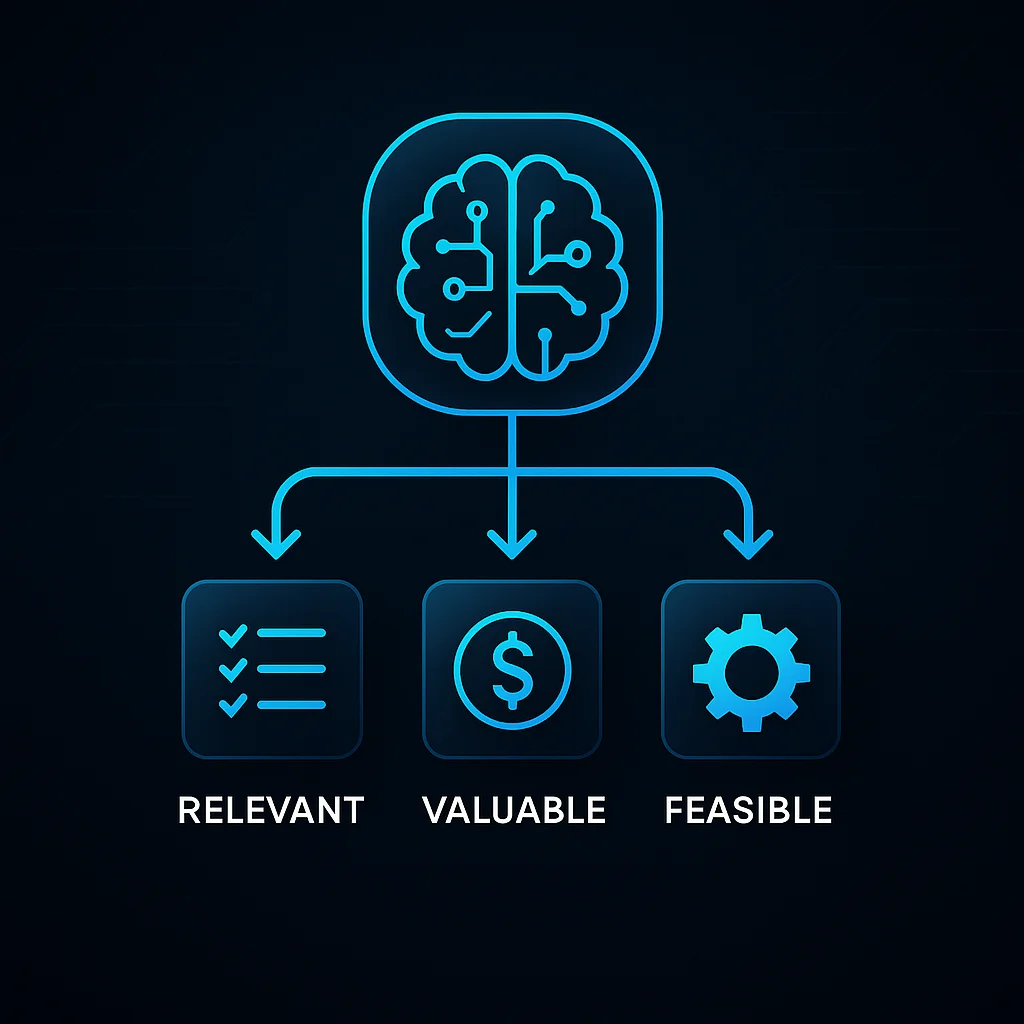
Choosing the right AI automation decision model is crucial for small businesses aiming to invest wisely in automation that lasts. Many owners can build impressive prototypes, but when it comes to daily reliability, costly failures often arise. That’s where a step-by-step decision framework like the 3-Gate Model comes in—giving small teams a practical, repeatable way to determine which processes are worth automating and how far to go.
“Teams can prototype fast, but production reliability decides ROI. Assistive automation often works; full autonomy still needs tighter controls.”
Too many guides gloss over the hard trade-offs: reliability, repeatability, and real business impact. By structuring your choices through three clear gates—task worth, AI capability, and business readiness—you can avoid chasing buzzwords and focus on solutions that actually reduce manual toil.
As the obra/superpowers agentic skills framework and the K-Dense-AI/scientific-agent-skills Python skill library show, the next wave of automation isn’t about whether you can build an agent—but about which tasks are worth automating for your specific workflow.
Not every process needs AI. The first gate asks: Is this task genuinely worth automating? In small businesses where resources and budgets are limited, starting with high-value, repetitive tasks ensures you get the most out of automation initiatives.
Key takeaway: Focusing AI on a painful, repetitive process delivers the highest ROI.
The second gate—the heart of the AI automation decision model—presses business owners to consider: Can current AI tools manage this task reliably enough for production?
For most small teams, assistive automation (AI suggesting actions, humans approving final steps) balances innovation with reliability. A 14-day pilot plan—rolling out changes gradually and tracking both successes and edge cases—lets you catch issues before they risk reputation or ROI.
# Example: AI email triage step
if ai_agent.confidence_score > 0.9:
    auto-route_email(email)
else:
    flag_for_human_review(email)
Pro tip: Full automation is tempting, but agent-assisted flows usually deliver better outcomes for small-business reliability.
StrongDM Software Factory recommends pairing agents with scenario-based specs instead of human-written test cases—a technique proven to reduce downtime and unexpected errors in production.
The third gate is your reality check: Does automating this process make financial and operational sense for your business right now? This step forces you to weigh benefits against upfront effort, risk of disruption, and staff readiness.
Before a full rollout, run a 14-day pilot. Use a scoring rubric:
Add your scores. Tasks above 12 are strong automation candidates; below 9 may need more prep.
Key takeaway: If an AI tool can't consistently deliver, it may create more headaches than it solves. Score before you deploy.
Learn how local expertise and a practical model-agnostic approach support pilots that deliver value, not surprise rework.
Let’s see the 3-Gate AI automation decision model in action for a small field service business:
Our SMSai platform is a real-world proof of this approach in action—combining AI agent analysis with assisted human review to automate high-volume communications reliably.
The best automation for small businesses blends the efficiency of AI with human know-how, not “set it and forget it” full autonomy.
Over-automation and unreliable pilots are the big gotchas for small teams. Avoid these traps by following the 3-gate model:
Market signals, including OpenAI’s pricing for advanced AI agents and high operating costs highlighted by Ed Zitron’s AWS analysis, remind us that small business automation must stay tightly aligned to value delivered—not chasing costly complexity.
Key takeaway: Simpler, well-tested automations almost always pay off better than ambitious, unreliable “moonshots.”
Small business owners who use a structured AI automation decision model lower their risk of project overruns and reap better returns from every investment. Start small, pilot thoughtfully, and partner with local experts familiar with the realities of regional operations.
AI simplifies, it doesn’t replace. The right model integrates with your team’s expertise, not around it.
To help build a practical plan for your business, explore our AI Project Setup starter process or connect with an AI integration lead.
Ready to apply the 3-Gate Model to your business?
Let’s talk about what custom AI services can do—no buzzwords, just results. Our Midwest team offers an automation readiness audit tailored for small operations like yours.
Talk with an AI Integration LeadDifficulty Level
Intermediate
Action Item
Map one workflow, run it through the 3-Gate Model, and pilot an agent-assisted automation.
Tools Mentioned
SMSai, AI Project Setup, obra/superpowers, K-Dense-AI/scientific-agent-skills
Time to Implement
14 days (pilot phase), 1-2 hours to score a workflow