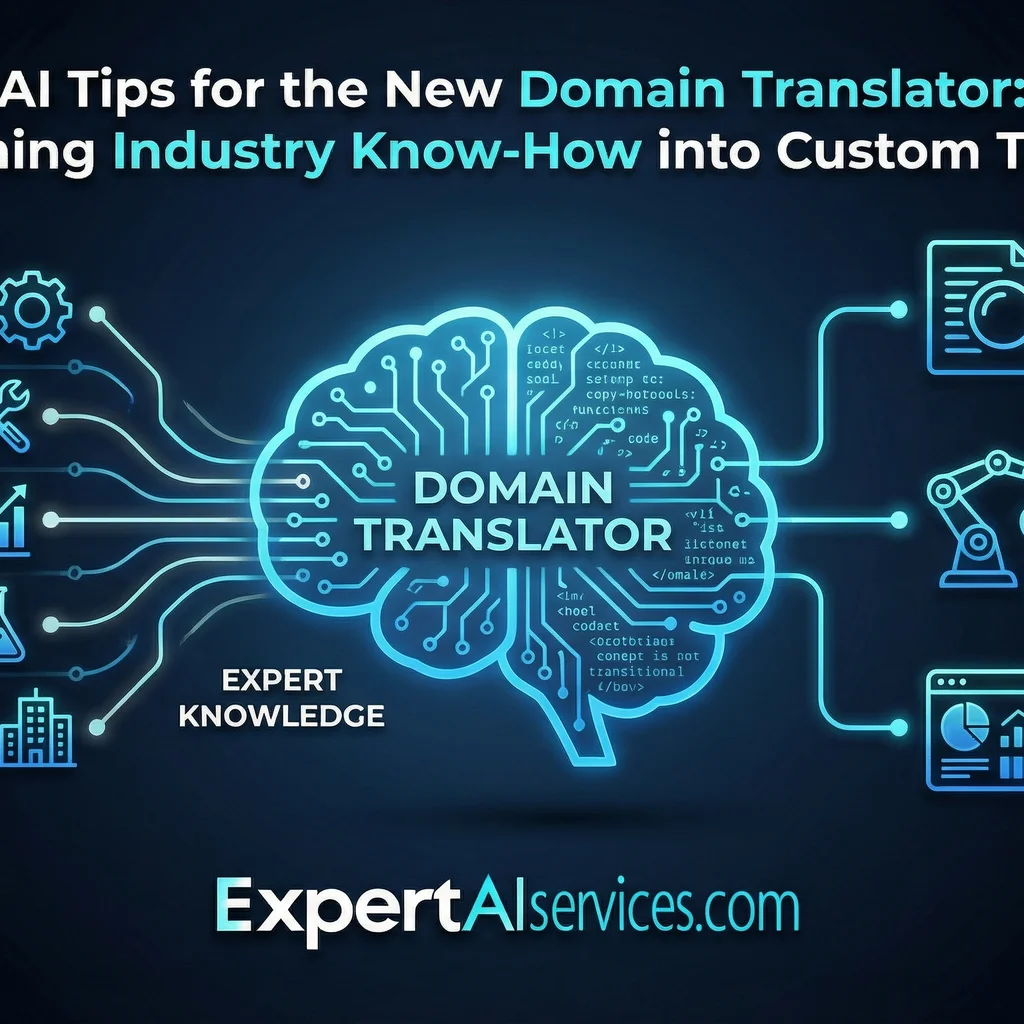
AI Tips for the New Domain Translator: Turning Industry Know-How
Unlocking the potential of AI domain translator tips enables industry specialists, consultants, and local business owners to transform hard-earned expertise into custom AI tools rapidly. This guide covers how to become a domain translator—someone who blends deep industry knowledge with the ability to describe and direct AI solutions. You'll gain clear steps to bridge the gap between what you know and what you can build, even with no prior coding experience.
You’ll also get strategies to avoid common pitfalls and make your transition into AI-enhanced workflows smooth and impactful.
What You'll Learn About AI Domain Translator Tips
Turning expertise into AI tools is now possible for non-developers. As a domain translator, you focus on recognizing high-impact problems and describing effective solutions. Every new tool you develop can improve your operations and create new business opportunities.
Prerequisites: What You Need to Get Started
- Deep expertise in your industry or field
- Curiosity about how AI can solve your real-world problems
- Willingness to describe tasks and processes in plain language
- Access to no-code or low-code AI platforms (like SMSai, DWG Extract, or a custom solution)
A model-agnostic approach—using systems that route to the right AI model for each job—means you’re never locked into one provider. This flexibility keeps costs low and results high. Explore our full AI services menu for more options.
Step-by-Step Guide: Turning Your Expertise into AI Tools
- Identify High-Value Problems: List common pain points or repetitive processes in your business or clients’ businesses. These are your best opportunities for automation or AI enhancement.
- Describe the Workflow: Write out, in non-technical terms, how work gets done step-by-step. Focus on inputs, decisions, and desired outcomes.
- Explore No-Code AI Tools: Start with industry-proven tools, such as SMSai for intelligent messaging or DWG Extract for document intelligence. Many AI solutions now let you configure behavior via forms or simple interfaces.
- Partner with an Integration Specialist: If you need more customization, work with an expert team that practices model-agnostic AI design. Teams like Expert AI Services can help you scope and launch quickly (see how it works).
- Iterate and Validate: Test your tool in real-world scenarios. Gather feedback and refine prompts or workflows, optimizing for efficiency and clarity.
Pro Tips: Accelerate Your AI Adoption
- Use model-agnostic tools so you can swap between OpenAI, Anthropic, Google, or open-source AIs as needed.
- Don’t chase technical depth—focus on accurately describing your industry’s needs and trusting your subject-matter insights.
- Leverage managed services and template libraries to accelerate builds.
- Document every process you automate for faster training and onboarding.
- Evaluate token spend and choose AI models for each task that balance efficiency and cost.
Common Pitfalls to Avoid on Your AI Domain Translator Journey
- Trying to learn to code before you’ve defined your core problems.
- Locking into a single AI model or provider—limit future flexibility.
- Under-investing in describing precise business processes, leading to unclear automation.
- Failing to validate new AI workflows with real users before rolling out at scale.
Ready to step up as a domain translator and productize your unique expertise into real AI results? Talk with an AI integration lead to get started today.