
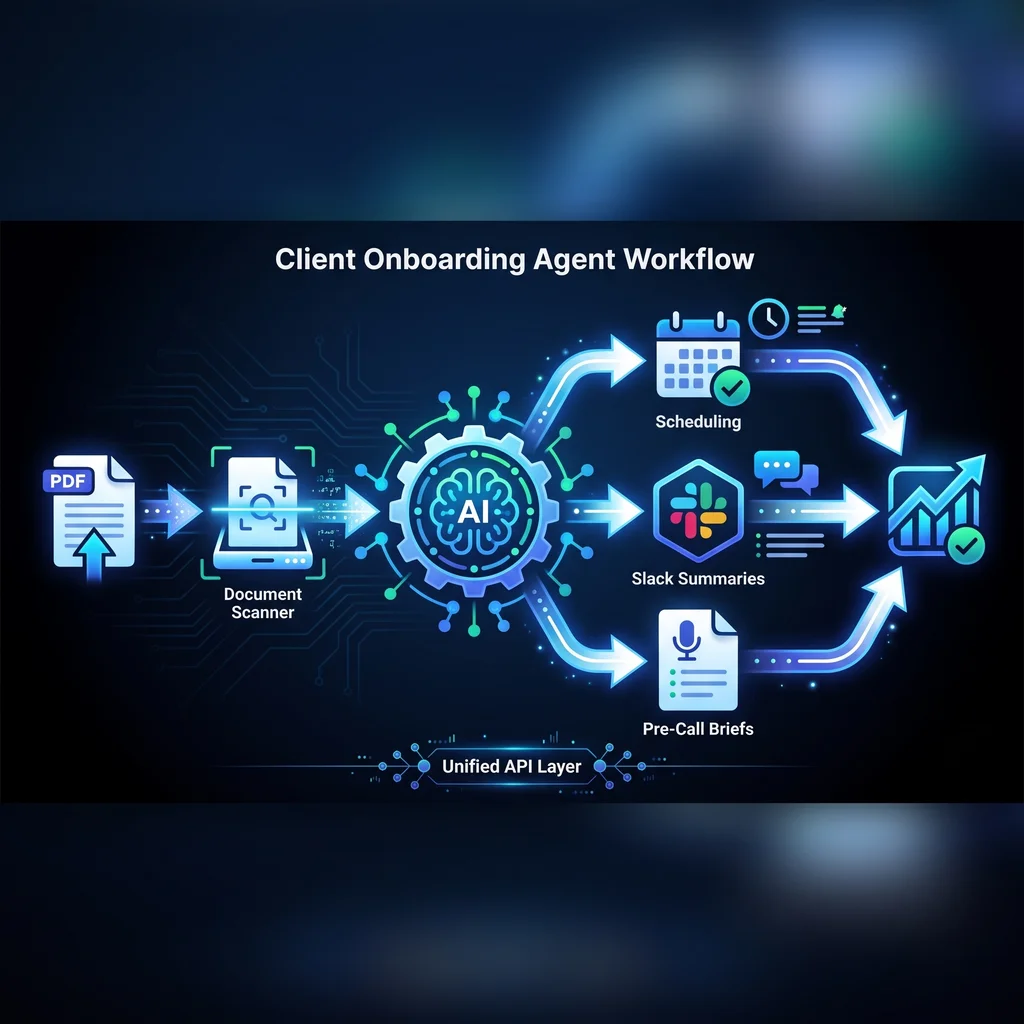
Client onboarding is one of the best places for a small business to test AI agents because the work is repetitive, visible, and easy to inspect. A new prospect or customer fills out a form. Someone reads it, pulls out the important details, finds a meeting time, alerts the right people, and prepares notes before the first real conversation. None of that requires full autonomy. It requires clean handoffs.
For Kansas business owners and operators, that distinction matters. The goal is not to add another shiny platform to an already crowded week. The goal is less software, more useful workflows. A client onboarding agent workflow can help technicians, coordinators, sales leads, and owners start from the same information instead of rebuilding context from email threads, calendar holds, and form fields.
At Expert AI Services, that practical view comes from real building-systems experience: controls, BAS, low-voltage coordination, and field work where details matter. The same operating lesson applies to AI. A workflow is only useful if the handoff is clear, the next person knows what changed, and the business keeps control of the decisions that matter. Learn more about that local approach on the Expert AI Services about page.
Small-business AI discussion is moving away from broad claims about agents that can do everything. The better conversation is about narrow workflows that save time in real operations. Client onboarding fits that pattern because the steps are familiar: collect the intake, summarize the need, prepare scheduling, notify the team, and build a pre-call brief.
That makes the workflow easier to evaluate. The owner can see whether the summary is accurate. The coordinator can check whether the meeting details are clean. The call lead can confirm whether the pre-call brief actually helps. If the workflow misses something, the fix is specific instead of vague.
AI should remove manual sorting and software clutter, not take judgment away from the people responsible for the customer relationship.
A useful onboarding agent starts with a defined boundary. The intake form arrives. The agent reads the submission and creates a short internal summary. It identifies missing details, drafts scheduling options, posts a Slack summary for the team, and prepares a pre-call brief for the person leading the kickoff conversation.
The intake summary should be plain and operational. Who is the customer? What are they asking for? What location, system, deadline, or business constraint did they mention? What is missing? The summary should make it easier for a person to understand the request quickly, not bury them in generated language.
The agent can draft scheduling language based on available meeting windows, but the owner or assigned coordinator should approve anything customer-facing. That approval gate protects the business from accidental promises, mismatched expectations, or a tone that does not fit the relationship.
The internal Slack summary gives the team a shared starting point. The pre-call brief gives the meeting lead a tighter version: customer context, likely needs, known unknowns, suggested questions, and any internal notes needed before the call. This is where AI can save real time without pretending to run the business.
The owner checkpoint is not extra friction. It is what makes the workflow reliable. Packaged small-business AI workflows are becoming more common, and connector standards are making it easier for AI systems to touch outside tools. That does not remove the need for approvals. It makes approval design more important.
In a good onboarding workflow, the agent can draft customer emails, meeting notes, and internal summaries. The person responsible for the relationship approves the message before it leaves the company. If the intake suggests a complex project, the owner can adjust the response. If the customer left out key details, the coordinator can ask for clarification. The agent handles the sorting and drafting. The business keeps judgment where it belongs.
A client onboarding agent should only have access to the tools required for the workflow. That may include an intake form, calendar availability, CRM records, an internal Slack channel, and a folder of approved service notes or intake templates. It does not need broad access to finance, payroll, or every customer file to prepare a useful first-call brief.
This is where custom AI services matter. A model-agnostic stack can connect the right tools without locking the business into one vendor or one pattern. But connection is not the same as permission. Owners still need a map of what the agent can read, what it can draft, what it can post internally, and what must wait for approval.
For a proof point on narrow, applied automation, SMSai shows the same idea in a different channel: use AI to handle specific communication work while keeping the workflow focused and measurable. See the applied example at SMSai.
Start with practical measurements. Did the team receive a cleaner summary? Did the meeting owner have better context before the call? Were fewer intake details missed? Did the coordinator spend less time copying information between tools? These are better signals than broad claims about autonomy.
The first version should be small enough to inspect. Once the workflow is stable, the business can decide whether to connect more systems, add document search, or build a more advanced follow-up process. This keeps the project grounded. It also protects the team from tool overload, which is one of the main reasons workflow automation fails to stick.
For many Kansas operators, the best next AI project is not a sweeping transformation. It is one well-scoped workflow that makes the week easier for the people already doing the work. Client onboarding is a strong candidate because it touches sales, coordination, operations, and customer experience without requiring the agent to make final business decisions.
The right build should be clear enough to explain on a whiteboard: intake arrives, AI summarizes, scheduling is drafted, Slack gets the internal update, the pre-call brief is prepared, and the owner approves customer-facing communication. That is the kind of workflow automation that can earn trust before the business expands it.
Expert AI Services builds custom AI services for businesses that want reliable handoffs, cleaner coordination, and practical automation without replacing the people who know the work. Talk with an AI integration lead when you are ready to scope the first version.
Process Type
Time Saved
Tools Used
Before
After