
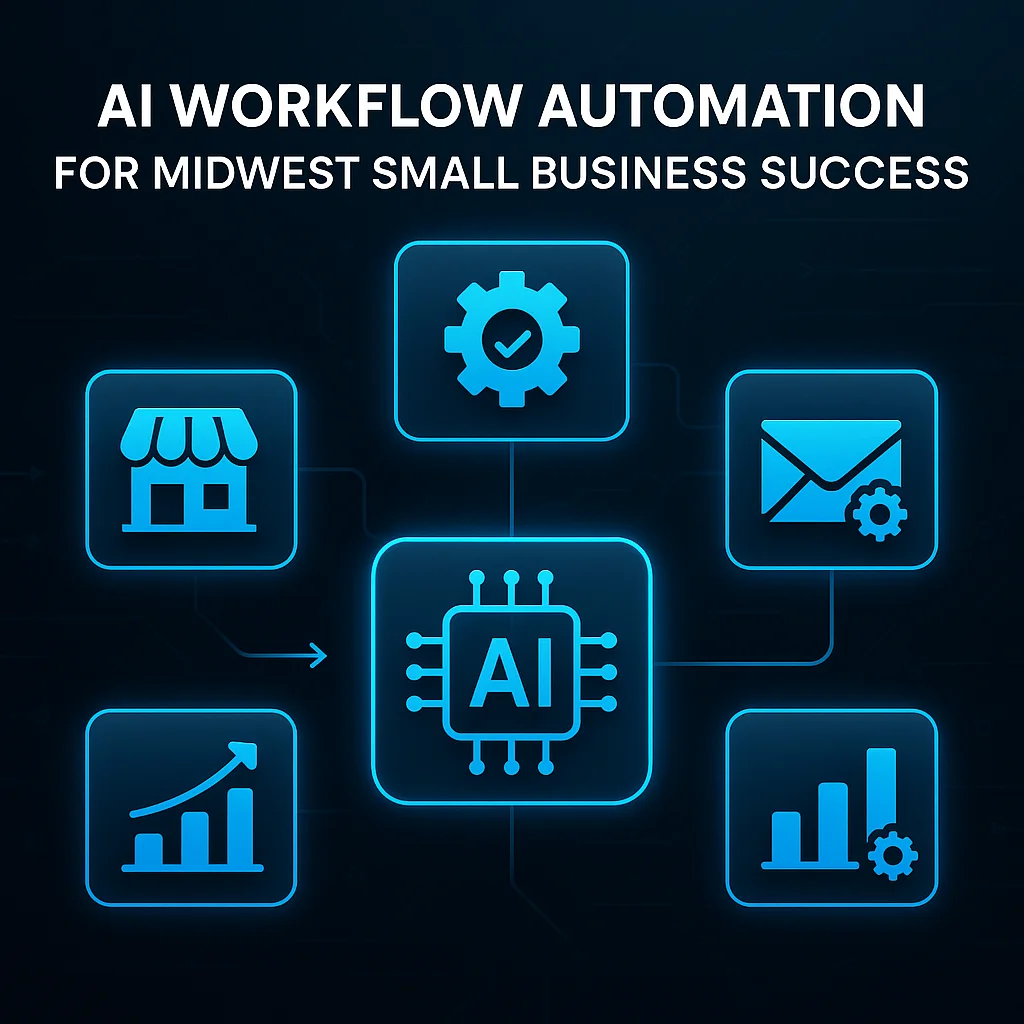
AI workflow automation for small business is no longer an experiment—it's a critical advantage for Midwest operations facing tight margins and ongoing workforce challenges. In this case study, we dig into the step-by-step process by which real Midwest small businesses have used custom AI services to automate repetitive tasks, boost team efficiency, and see tangible cost savings.
Based on dozens of conversations with Kansas owners, technicians, and coordinators, plus lessons learned from the field, here’s how digital transformation is actually unfolding across the region’s small business sector.
The realities facing small business owners in Kansas and the broader Midwest are different from Silicon Valley startups. Every dollar counts, field teams work with lean staff, and most owners wear multiple hats. Manual processes and software clutter combine to slow everyone down. That’s where AI workflow automation comes in—simplifying tasks so crews can focus on real work, not wrestling with manual data entry or tracking paperwork.
A key insight: "AI simplifies—all about removing manual toil, not replacing people. The best solutions are invisible helpers that free up valuable time."
Operators are already seeing workflow wins by deploying AI agents for:
Before implementing AI workflow automation, many Midwest small businesses experienced familiar challenges:
According to Midwest owners, "Juggling paperwork and software was a constant drag on real business. We needed reliable automations, not more apps."
The transition to automated business workflows wasn’t a single leap. Instead, successful teams moved step by step—starting with their biggest daily bottlenecks and expanding from there.
Most businesses began by mapping out manual processes that:
Unlike expensive "one-size-fits-all" solutions pitched to large enterprises, Midwest operators preferred custom AI services or workflow automation platforms that integrated with their existing stack, without forcing vendor lock-in. Teams running minimal headcounts—with the right AI agents—are achieving far more with less.
Teams piloted automations on a single process (like automated reminders via SMS) before expanding to:
"Reddit communities are flooded with practical workflow wins—small operators sharing how their AI automations gave them back nights and weekends."
What actually changed once automation went live? Local businesses saw:
Key takeaway: Model-agnostic stacks and pragmatic automation are delivering operational improvements to SMBs—without disruption, upheaval, or ballooning IT budgets.
If you’re considering AI workflow automation for your small business, here’s what Midwest field teams and owners recommend:
“AI is a helper—never a replacement. The best results come from integrating automations into the daily reality of Midwest teams.”
Expert AI Services was founded in Kansas by veterans of building automation systems, field engineering, and low-voltage projects. Our mission: AI simplifies, it doesn’t replace. We specialize in building custom, model-agnostic workflow automation for Midwest small businesses—putting your team’s needs first, not shoehorning you into someone else’s “platform.”
Read more about our story and commitment to Kansas businesses on our About page.
Ready to simplify your workflows? Let’s talk about practical AI automation for your operation.
Client Type
Midwest small businesses (field services, equipment dealers)
The Problem
Manual processes, software overload, and hidden costs slowed field teams and coordinators.
The Solution
Custom AI workflow automation—AI agents for appointment scheduling, document intelligence, and internal knowledge bases.
Result
Hours of manual data entry and scheduling reduced each week.
Result
Field teams accessed key specs instantly via knowledge base and SMS.
Result
Lower operational costs and fewer errors, without needing new hires.
Conclusion
Key Takeaway: Local-first workflow automation delivers practical, measurable wins for Midwest small businesses by fitting real operations—not upending them.