
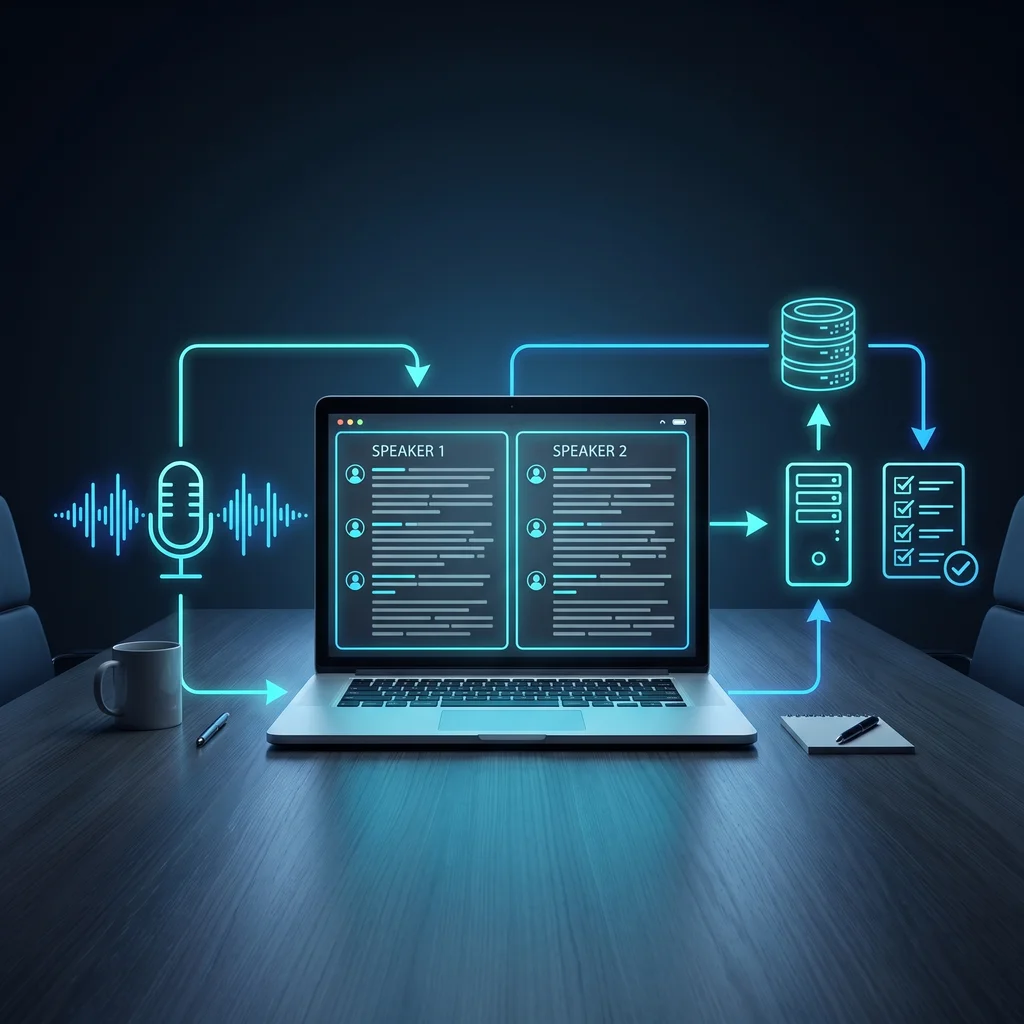
For many Kansas business owners, the best first AI project is not a company-wide platform change. It is a small, useful workflow that makes the next staff meeting easier to remember and easier to act on. Local AI meeting notes fit that starting point because the task is familiar, the benefit is easy to inspect, and the privacy questions are concrete.
Meeting notes usually hold the details operators care about most: customer commitments, hiring decisions, vendor issues, sales follow-up, project risks, and the small handoffs that keep the week moving. A cloud AI meeting assistant can be convenient, but some conversations deserve tighter handling. A local LLM for business can help test transcription and summaries while keeping more of the workflow close to your own storage, devices, and retention rules.
This does not mean every small business should abandon cloud tools. It means local AI can start where control matters and where the work is narrow enough to judge. A practical pilot turns one recurring meeting into a private meeting transcription workflow, then checks whether the notes are accurate, useful, and worth keeping.
Private notes are a better first step than trying to automate a whole department. The source material behind this article points to open-source meeting-note work such as Meetily, along with local tools and models like Ollama, Whisper, Parakeet, and local storage. The important lesson for business owners is not the tool list by itself. It is the shape of the workflow: capture the conversation, turn speech into text, summarize it, review it, and decide what should be retained.
That sequence gives owners something they can validate. You can compare a transcript against what was actually said. You can ask whether the summary missed a decision. You can check whether action items are assigned to the right person. You can also decide when a meeting should not be recorded at all.
Start with meetings where the business value is clear and the privacy risk is manageable.
That is a plain rule, but it matters. Internal operations meetings, recurring leadership check-ins, or planning sessions are usually easier to pilot than customer calls, employee discipline conversations, or legal discussions. The first goal is not to prove that AI can listen to everything. The goal is to prove that a focused, reviewed workflow can save time without creating a mess.
A local AI meeting notes workflow has four parts. First, decide what audio is allowed into the pilot. Second, run private meeting transcription with a tool or model that fits your environment. Third, summarize with a local model or controlled AI step. Fourth, make a human review the notes before they become a business record.
Pick three internal meetings. Use the same meeting type each time so the review is fair. A weekly operations meeting is a better test than three unrelated conversations because repeated structure makes problems easier to spot. If the summary repeatedly misses due dates, names, or decisions, you will see the pattern quickly.
Small business AI privacy is not just about where a model runs. It is also about what you keep, who can see it, and when it gets deleted. Before the first pilot meeting, decide whether you will keep raw audio, full transcripts, edited summaries, or action-item lists only. For many businesses, the final reviewed summary is more useful than a long transcript that no one will read.
An AI meeting assistant should not silently publish decisions into your business systems. A person should review names, dates, commitments, and sensitive details. The reviewer should also remove side comments that do not belong in the final record. This step keeps AI in the helper role and protects the team from treating rough machine output as settled fact.
Start with one laptop, one meeting type, and one owner for the process. Install or configure the local transcription and summarization pieces you want to test. Keep the setup simple enough that a nontechnical manager can understand the flow: audio comes in, transcript is produced, summary is drafted, person reviews, final notes are saved.
Use a half day for setup and one week for review. In that week, compare the AI notes with manually written notes from the same meeting. Look for practical value, not perfection. Did the notes catch the main decisions? Did they reduce follow-up messages? Did they help someone who missed the meeting get up to speed? Did the workflow create new cleanup work that cancels out the benefit?
Do not add customer meetings or sensitive HR discussions during this first round. Keeping the scope tight makes the decision easier. After three internal meetings, you should know whether the workflow deserves more testing, needs adjustment, or should stay on the shelf.
Local AI is useful, but it is not automatically simpler. Cloud tools may still be the better fit when the business needs calendar integrations, easy sharing, mobile access, vendor support, or very low setup burden. A local workflow asks more from the owner: device management, storage rules, updates, and support planning.
The right question is not local versus cloud forever. The right question is which meetings need extra control and which workflows simply need dependable convenience. For an owner already dealing with too many disconnected tools, the best answer may be a blended one: keep sensitive internal notes local, use cloud tools where convenience matters, and avoid pushing every conversation through the same process.
Expert AI Services approaches this kind of work with a local-first, operator-friendly lens. Our team focuses on practical custom AI services that reduce manual toil without burying owners in software. Products like SMSai show the same pattern in another workflow: use AI where it makes communication easier, keep the process understandable, and build around the way real businesses already operate.
If you want to start local AI without overbuilding, meeting notes are a sensible place to begin. Test local transcription and summarization on three internal meetings, write the review and retention rules, then decide from evidence. That is how AI becomes less software and more useful workflow.
Process Type
Private meeting-note transcription and summarization
Time Saved
Validate during the one-week pilot based on meeting volume and manual note cleanup time.
Tools Used
Meetily, Ollama, Whisper, Parakeet, local storage, human review checklist
Before
Owners manually write notes, chase decisions, and store meeting details across notebooks, documents, and chat threads.
After
A reviewed local AI workflow drafts transcripts, summaries, and action items while retention rules keep sensitive notes controlled.